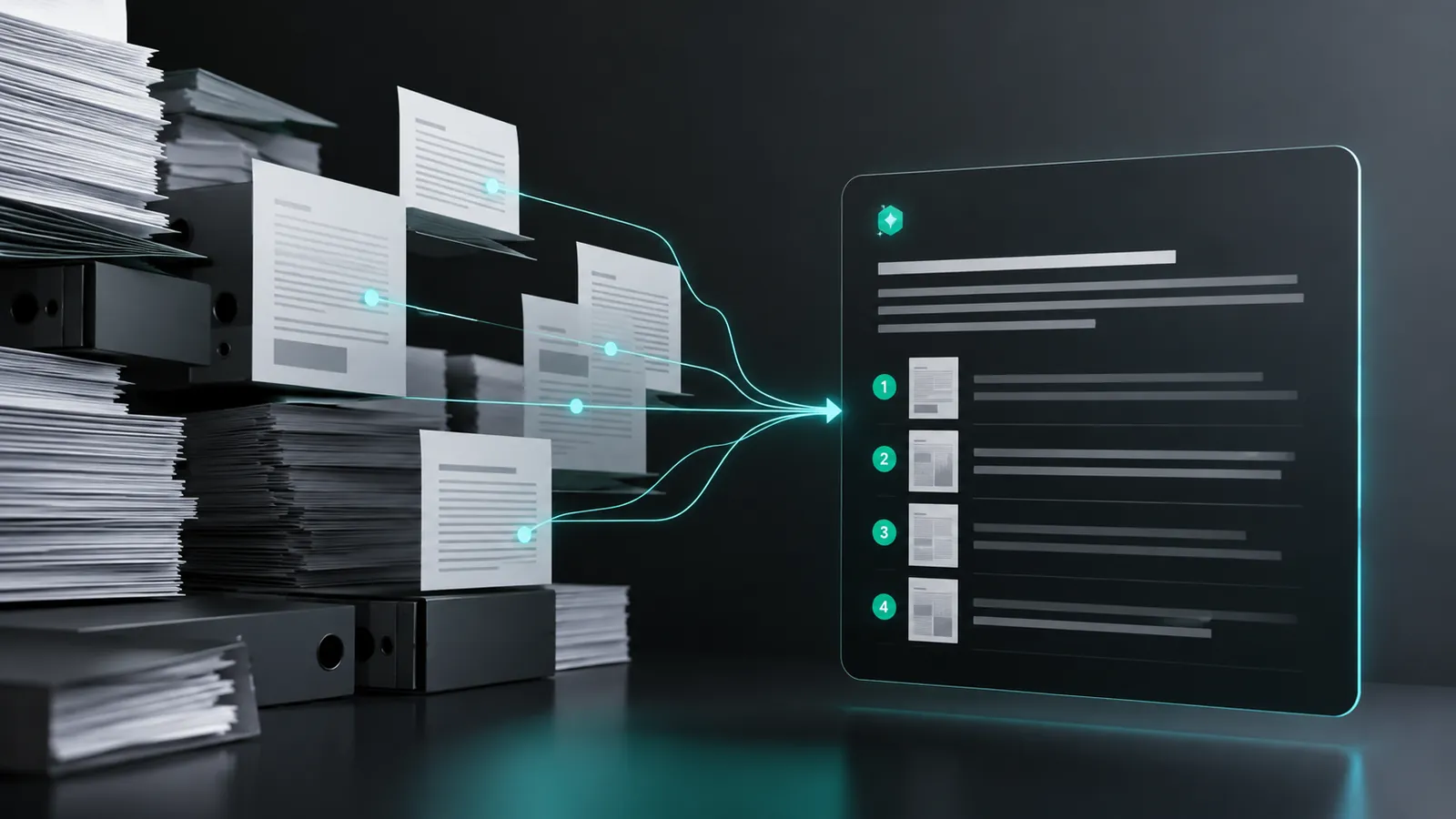
Enterprise archives usually do not lack documents. The hard part is that the needed evidence is hidden in contracts, acts, equipment passports, memos, scans, and tables. Classic search returns files, while the expert still reads and reconciles them manually.
RAG changes the workflow by giving the model current context from an external index instead of relying only on parametric memory. Lewis et al. framed RAG as a combination of a generative model and a non-parametric document memory. In enterprise settings, the decisive value is not fluent text but verifiability.
Knovium designs the core scenario around provenance. The index stores document, page, passage, object type, and links to neighboring evidence. An answer to an engineering or legal question can therefore show a chain of grounds, not just one matching paragraph.
In practice, this changes what an employee actually checks. Instead of opening five files and reconciling dates and numbers by hand, they get a ready chain with a page reference for every link — and spend time on quick verification of specific points, not on searching.
Before a pilot, it is worth checking what share of the archive can even support such a chain: do documents carry page numbers, stable references, and enough metadata to link one document to another, not just to the question itself.